APOGEE
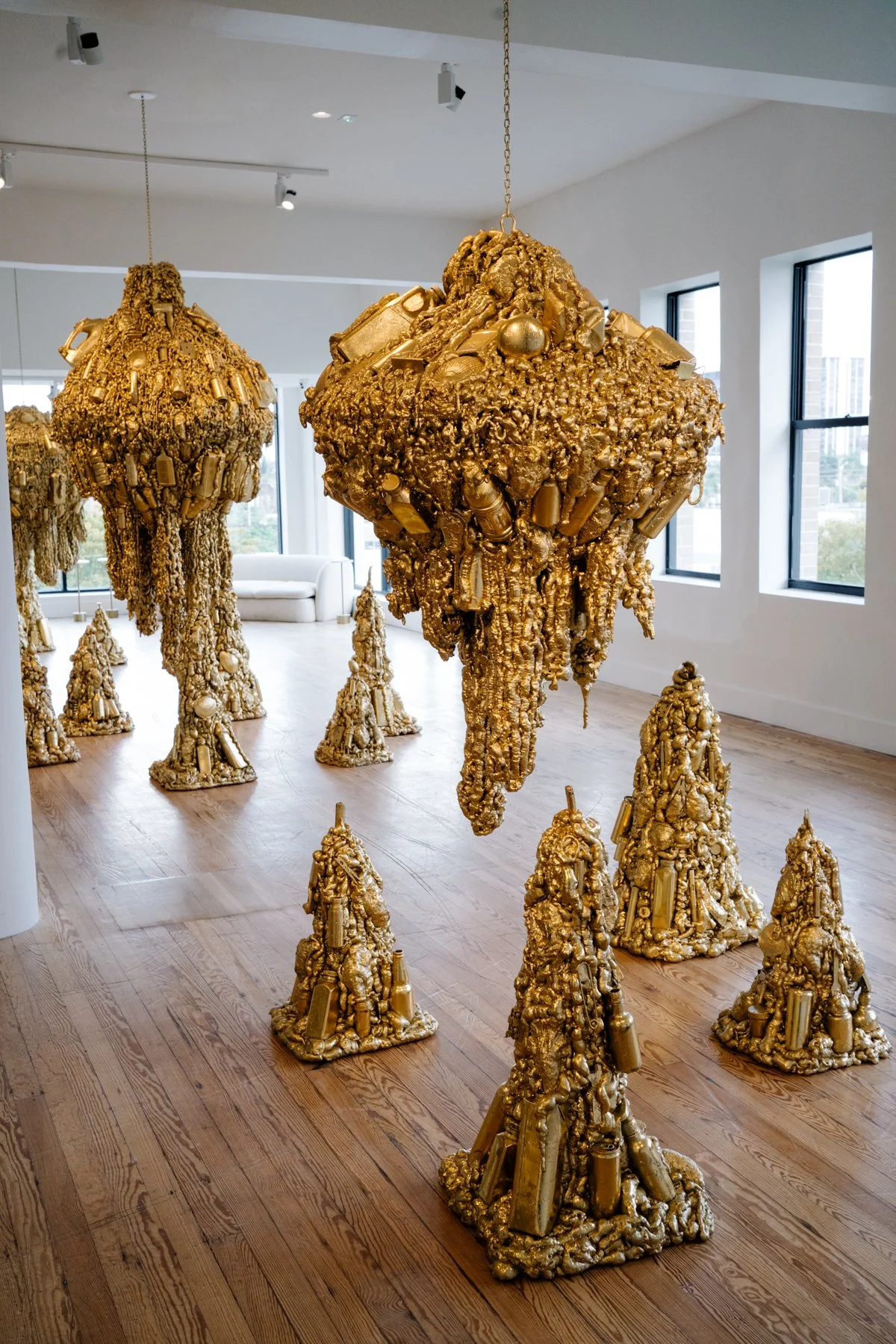
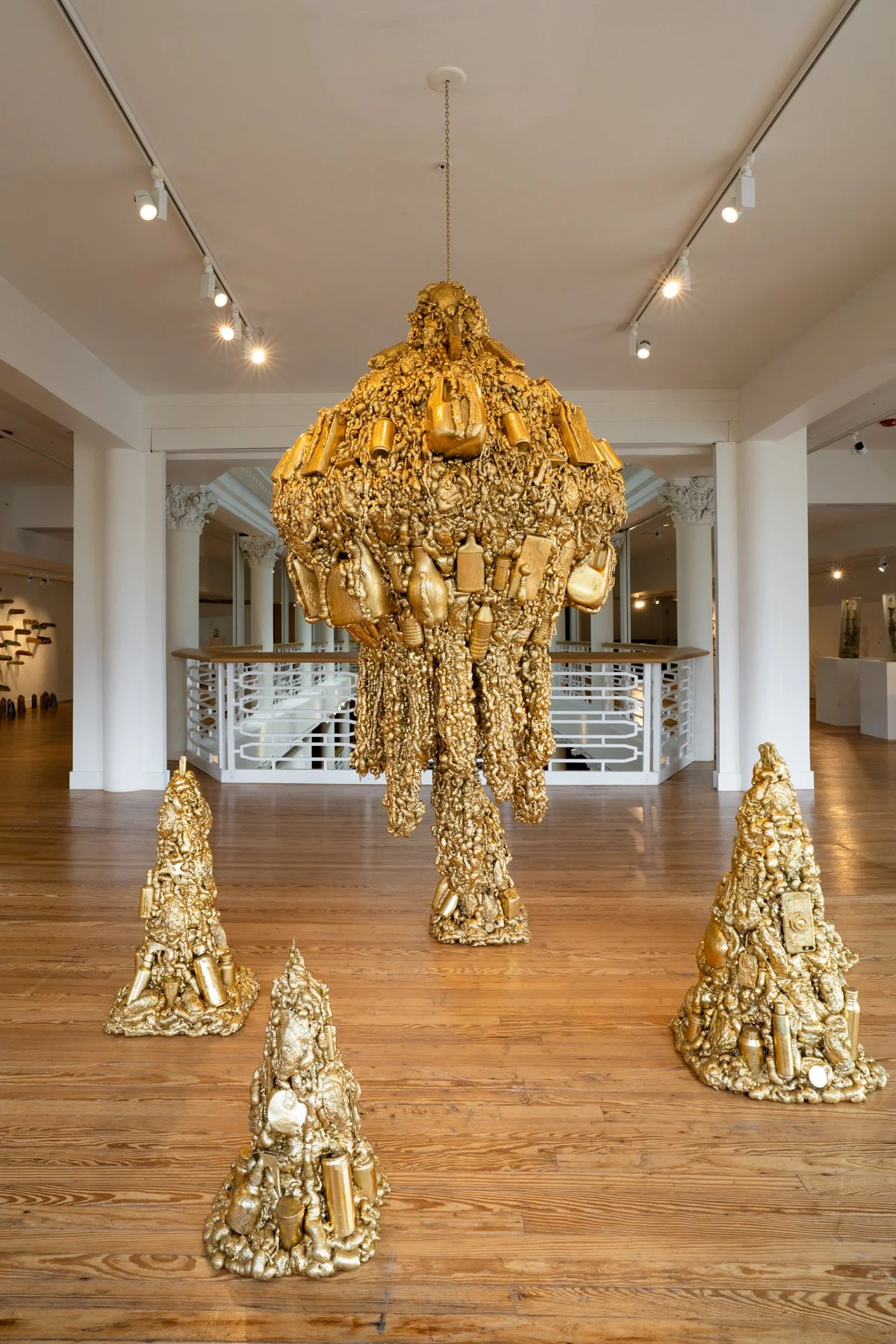
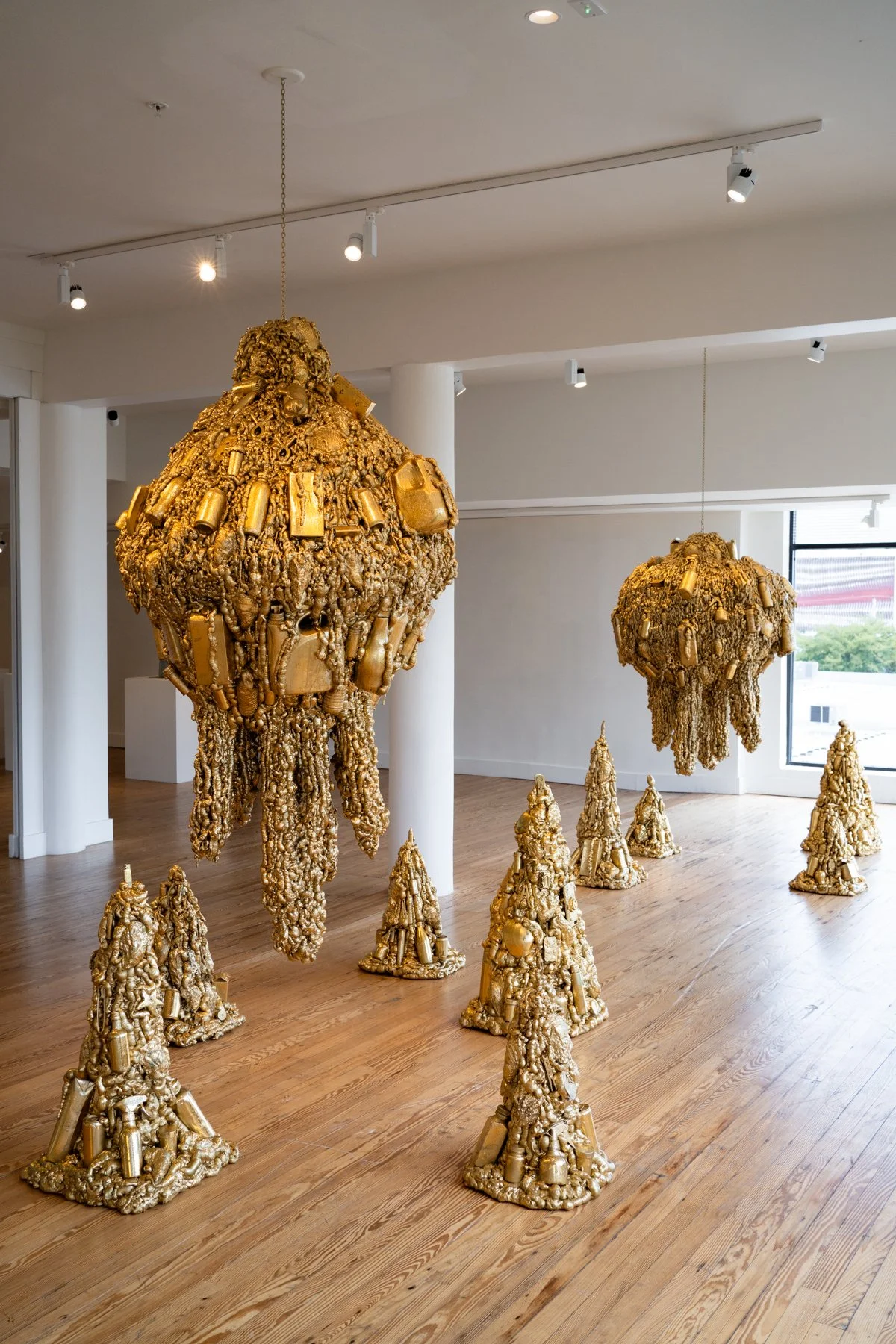
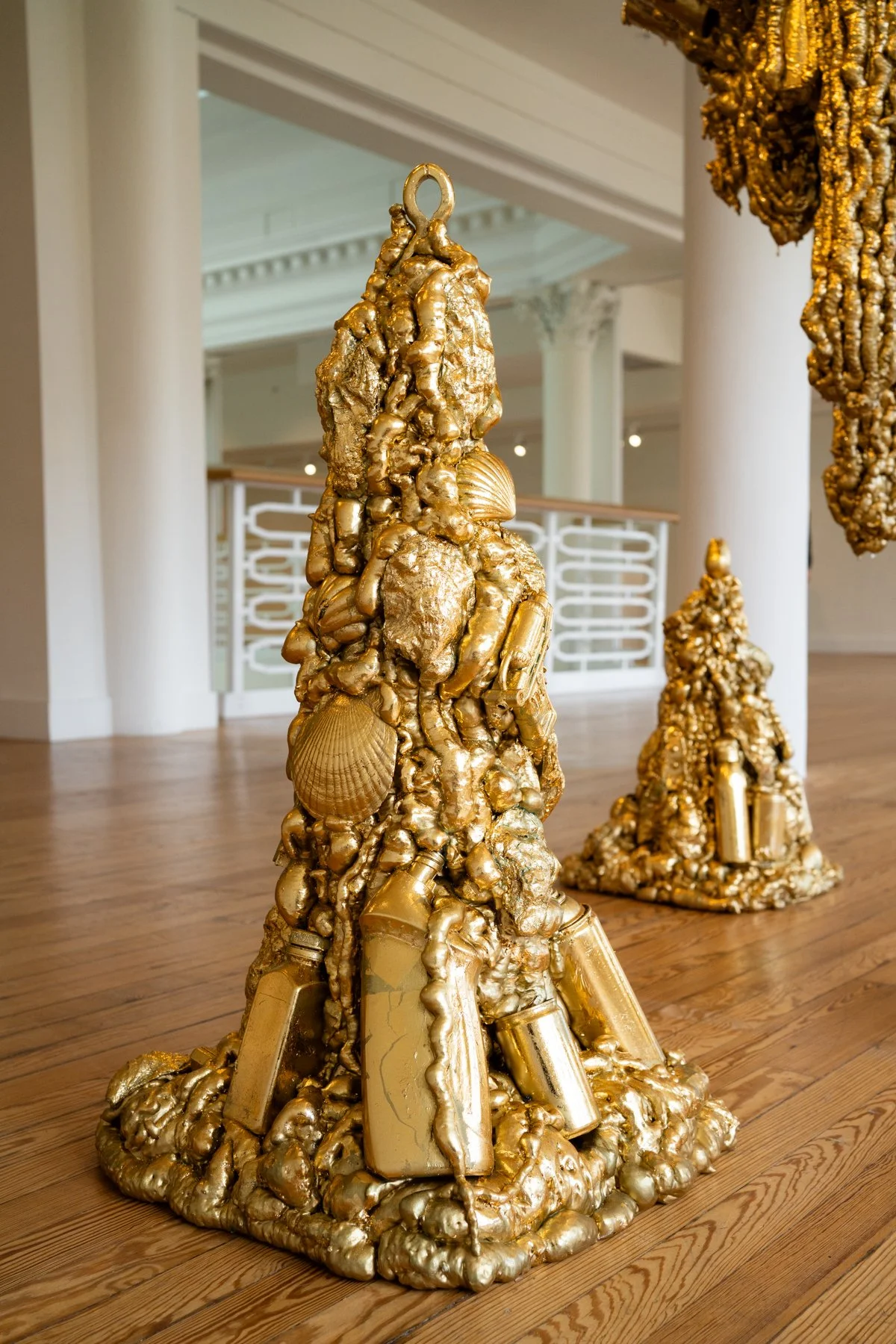
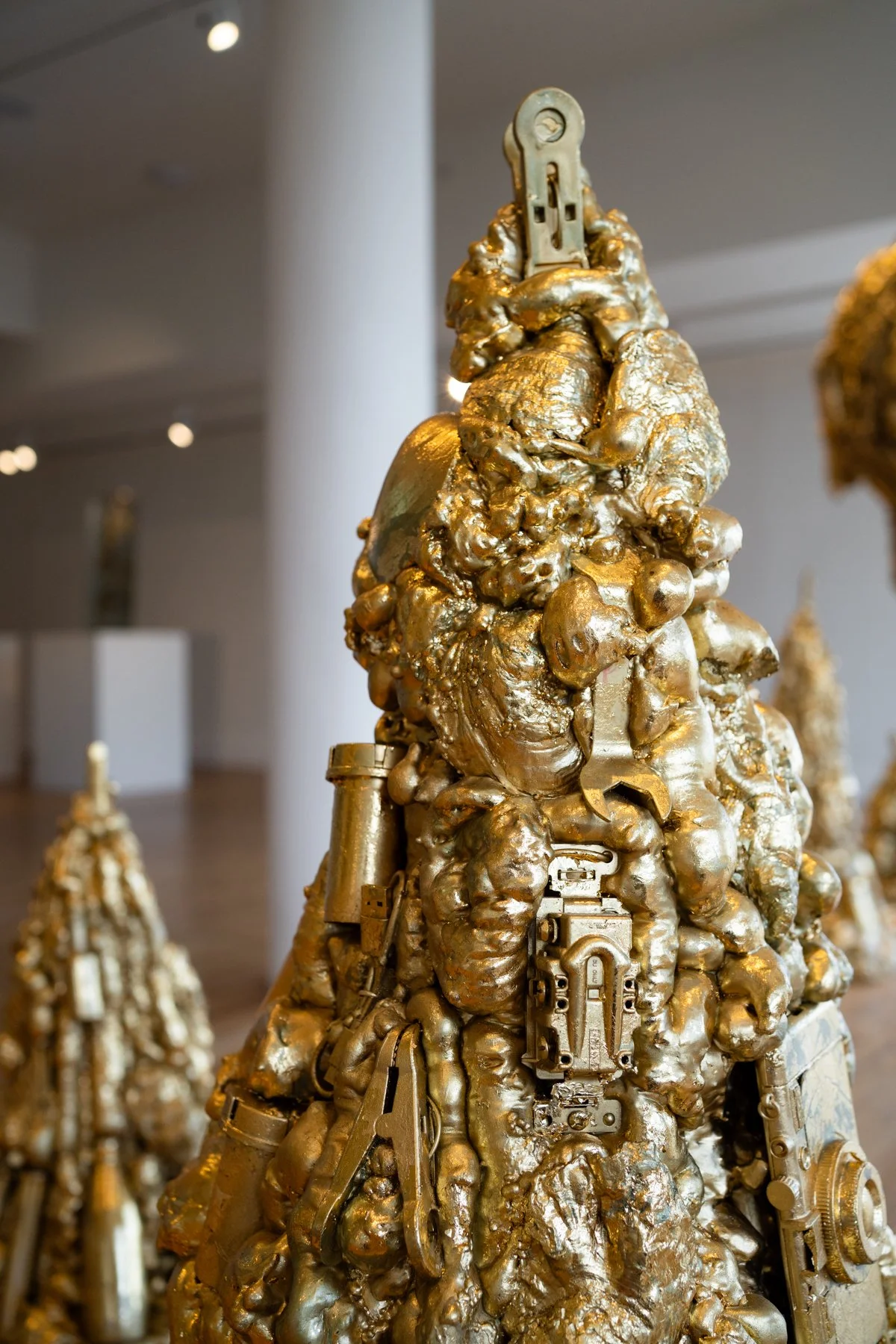
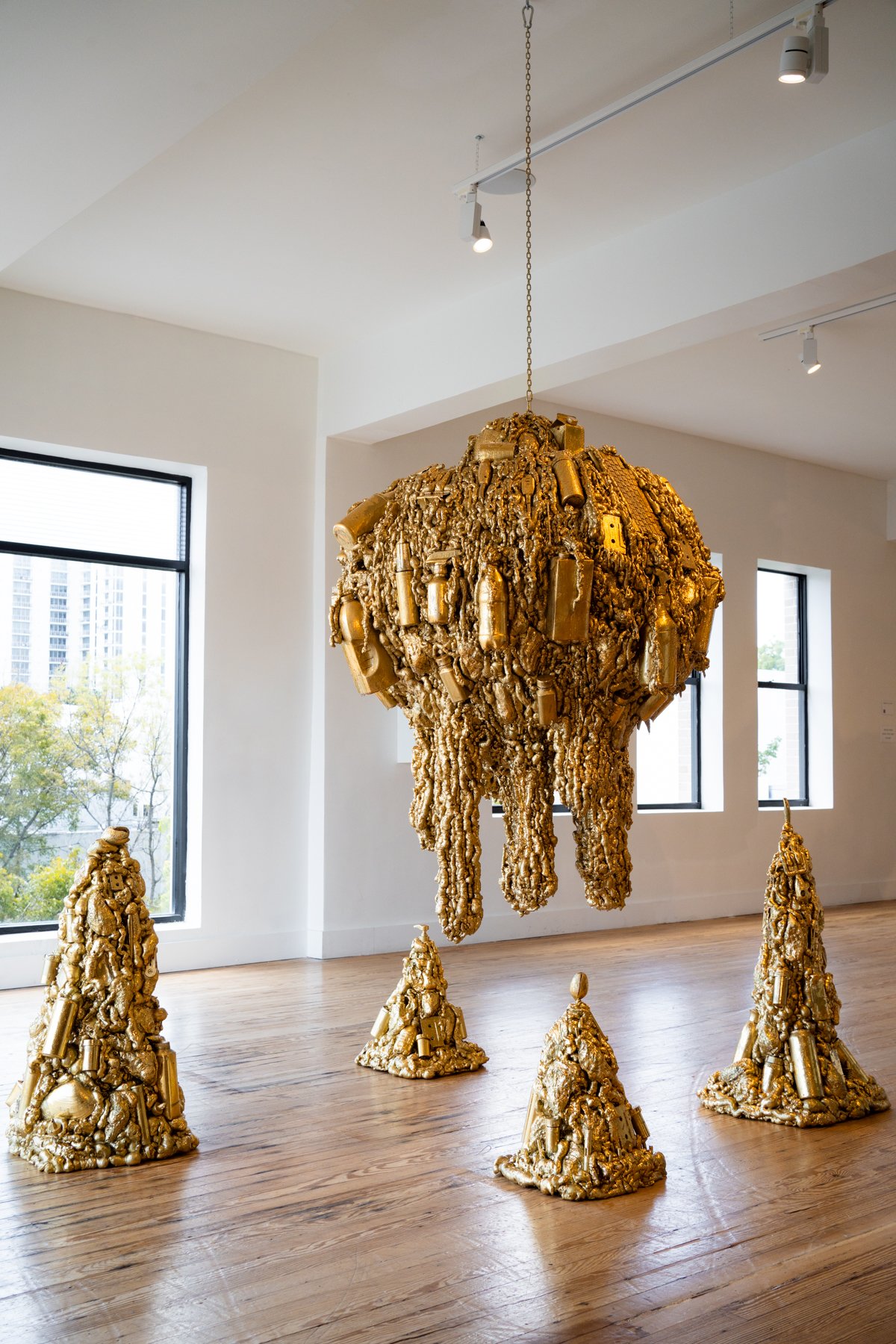
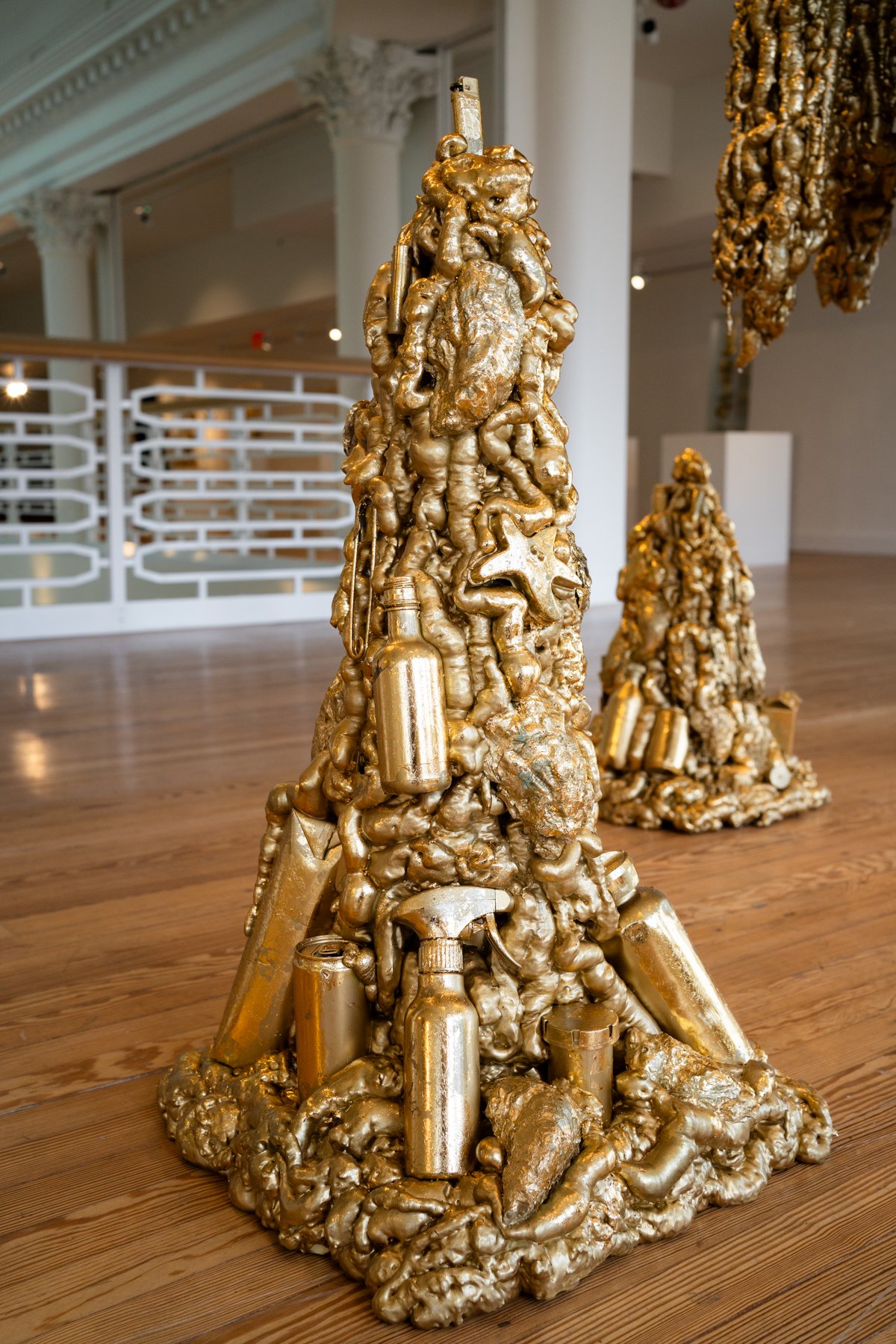
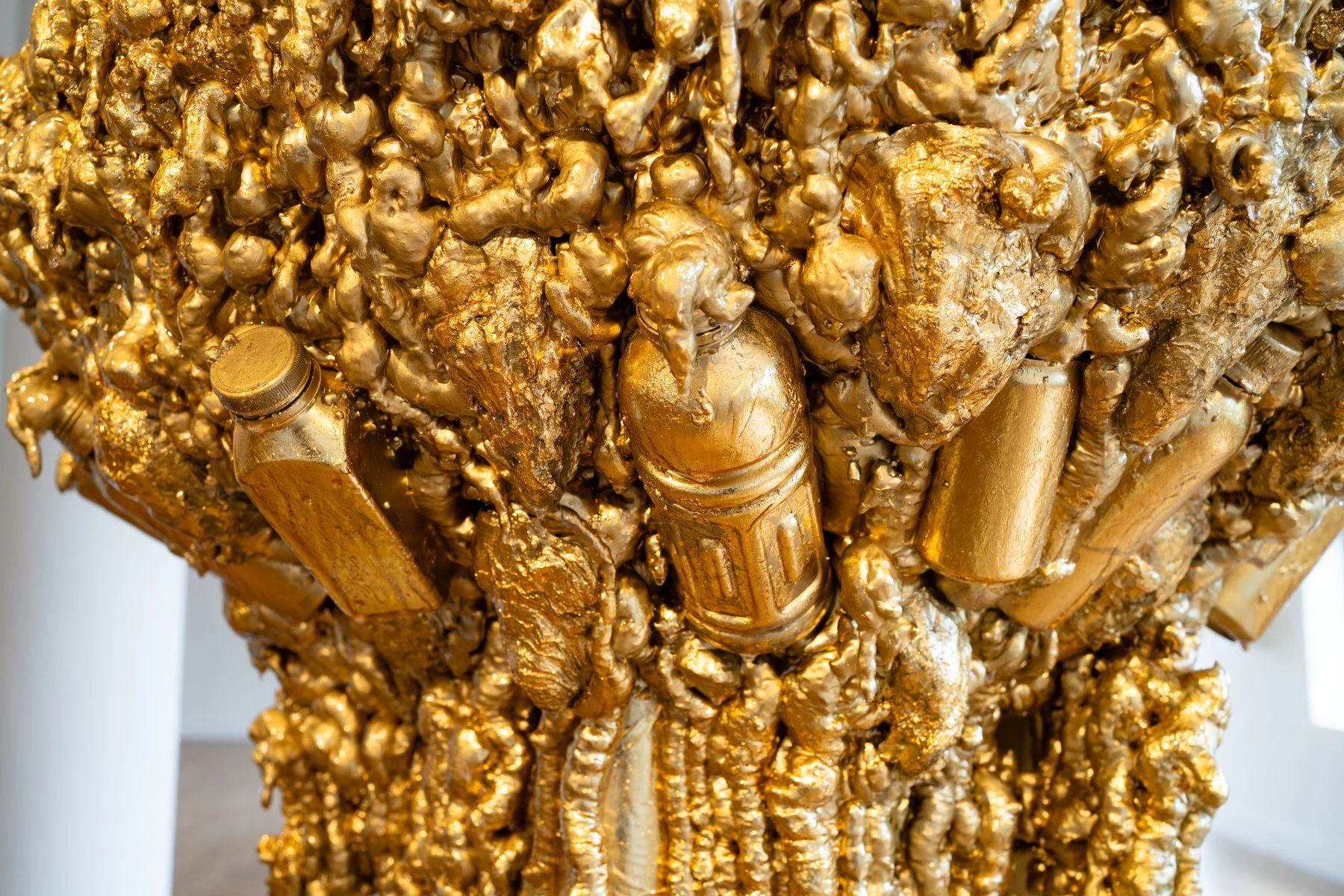
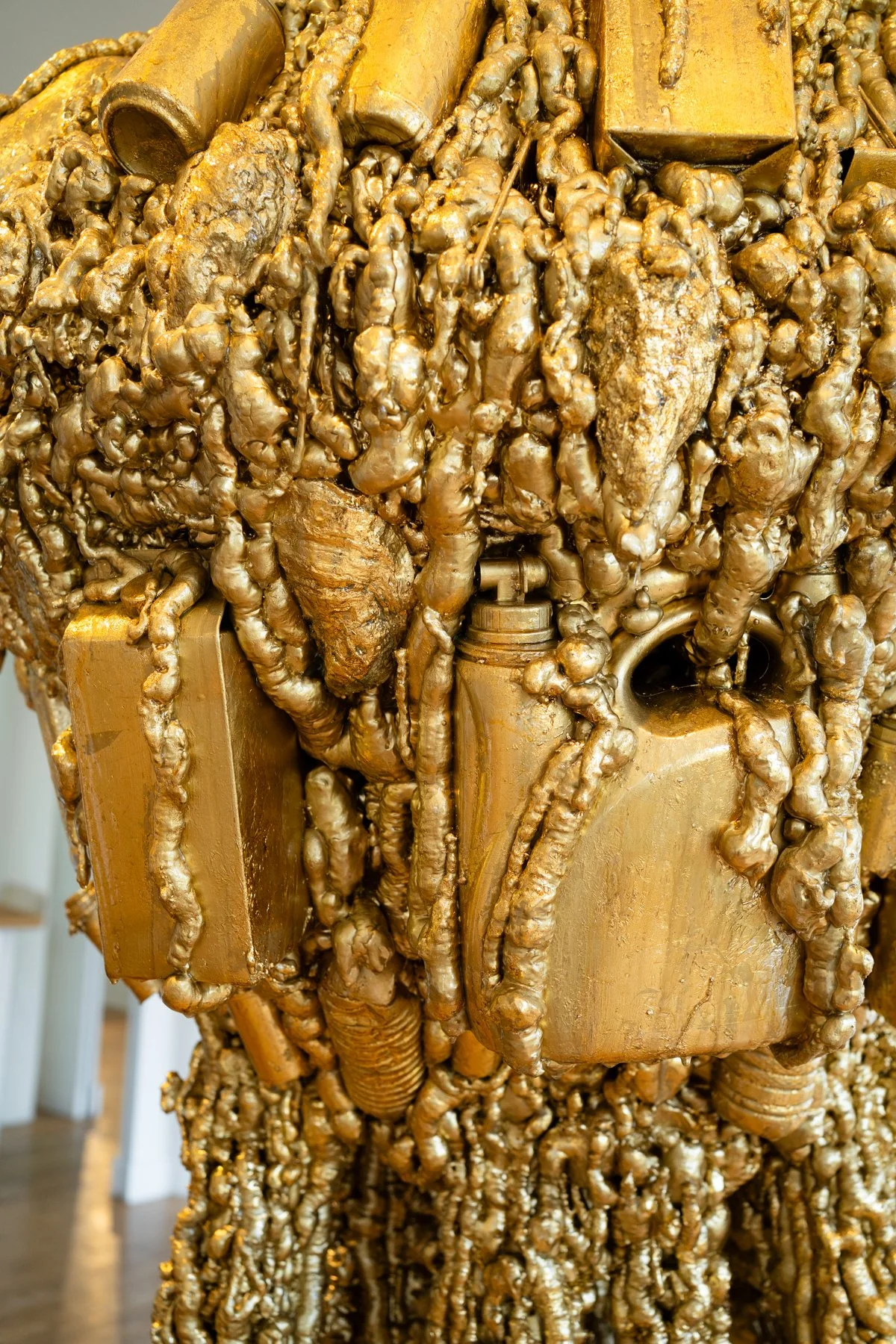
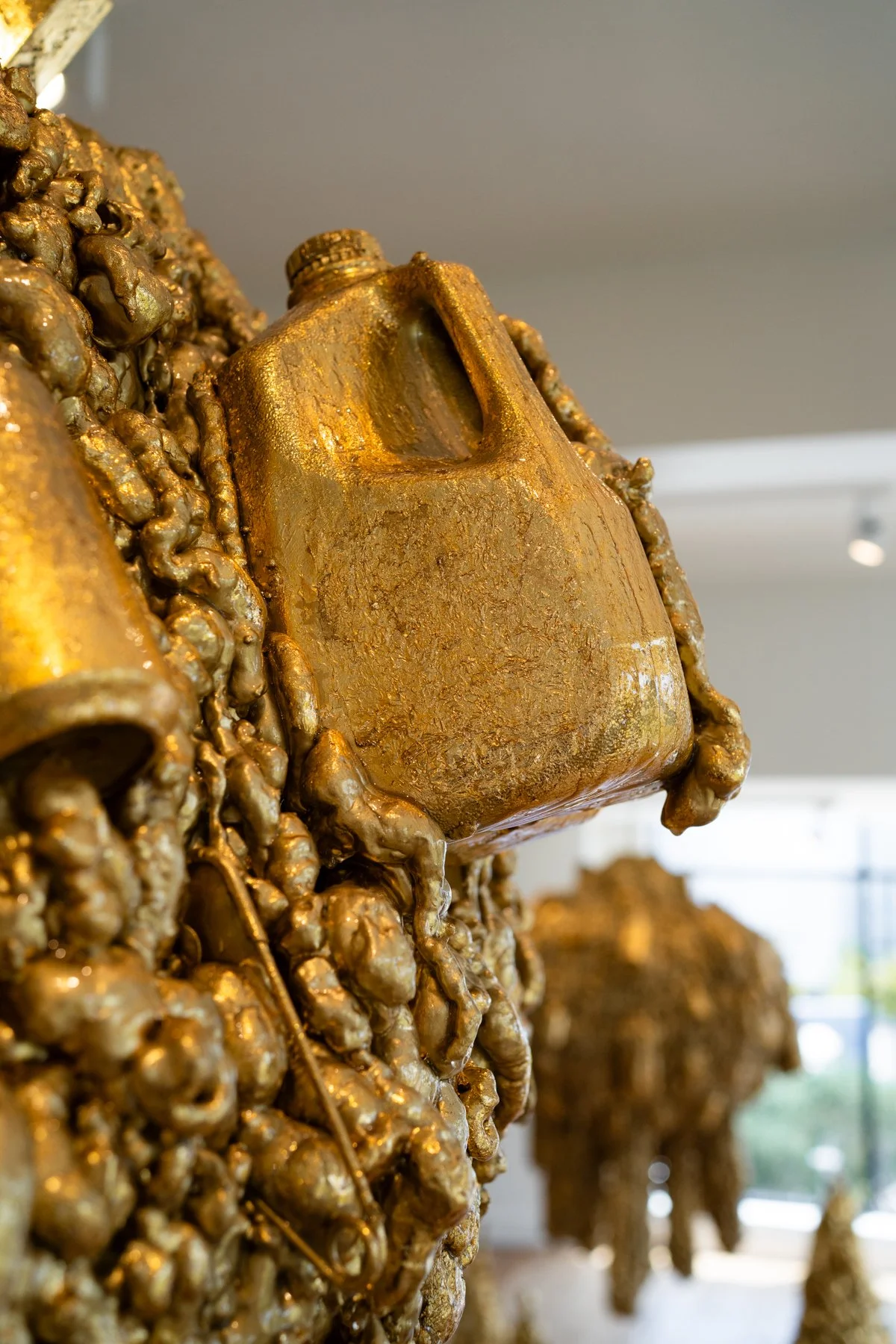
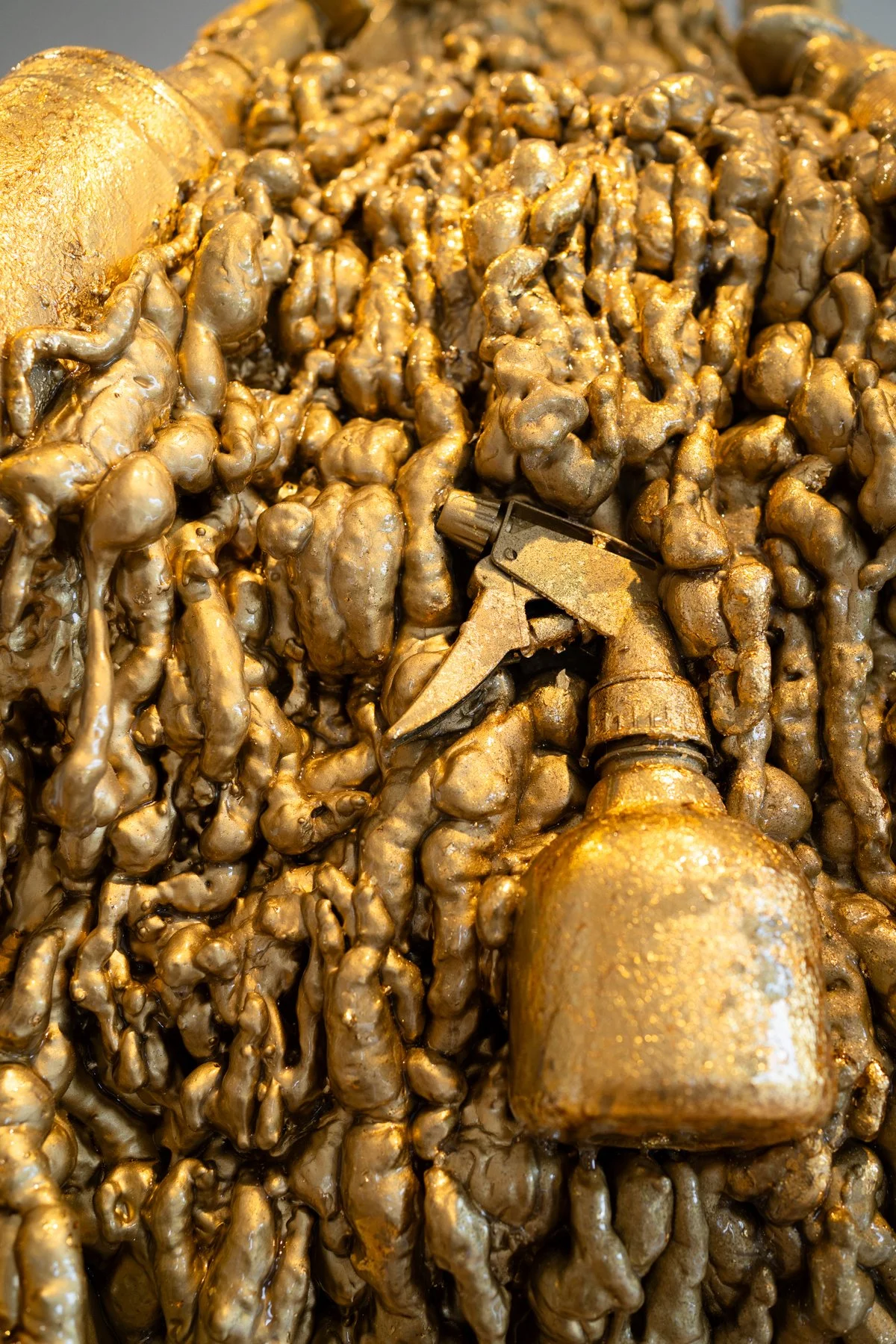
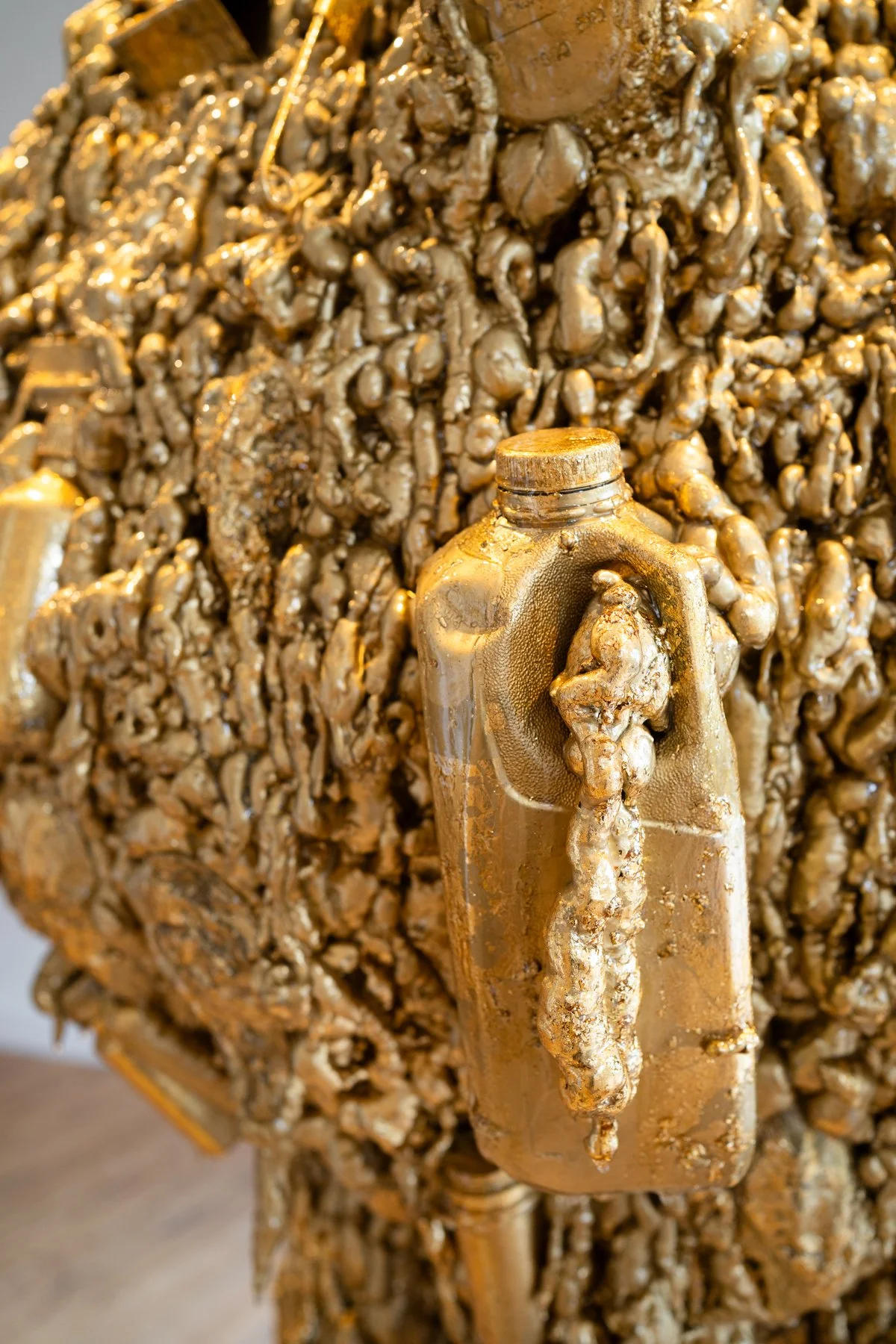
At the farthest reach of motion, pause becomes meaning. A ceiling-hung mass of gilded refuse, irons, plastic bottles, shells, faces rising spires on the floor. The two assemblies lock into “pendulum logic” at apogee, the instant when momentum empties out and intention is exposed. Nothing moves, yet everything is charged: gravity waits, and so do we. The piece splices timescales. Domestic time (the iron’s heat cycle, the bottle’s quick convenience) meets tidal time along the coast where these objects wash up, and both brush against geologic time, measured in pressure and accretion. The stalagmite-like forms echo cave growth, matter laid down drop by drop, while the suspended cluster suggests a decision deferred. Between them is a bright, deliberate gap: the swing path where consequences travel.
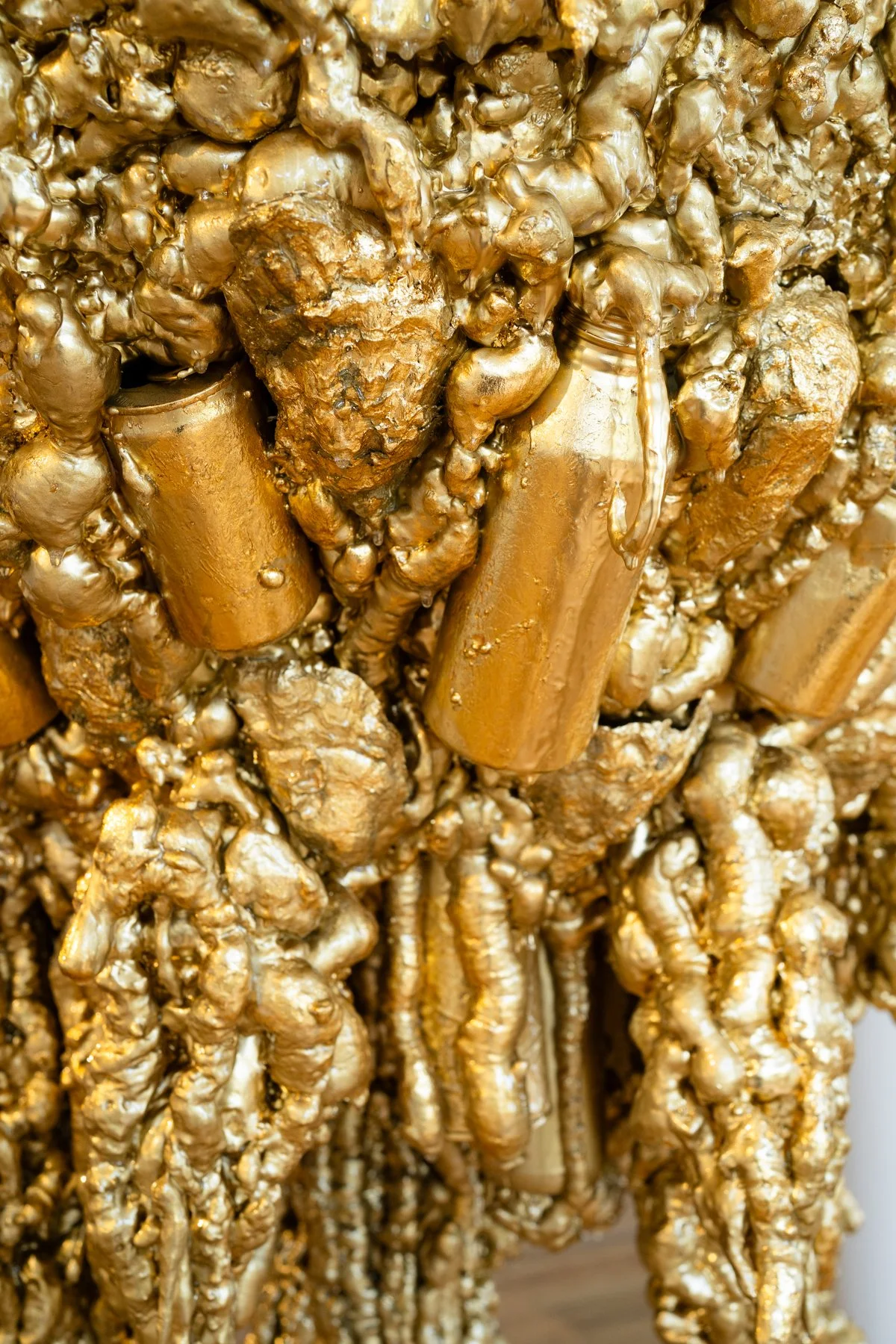
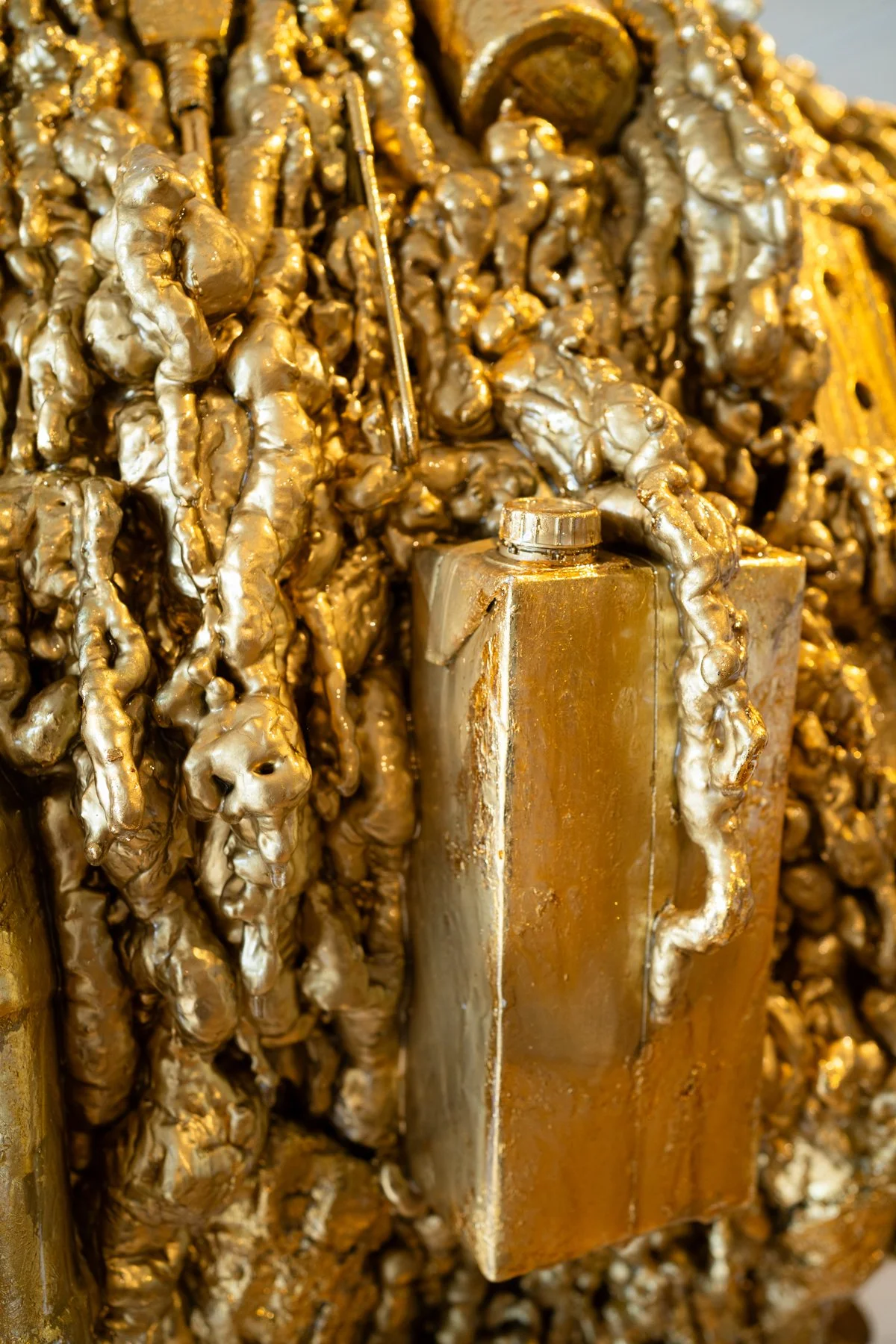
Gold complicates the scene. It makes the objects luminous but not innocent, turning waste into something that reads as treasure while refusing to launder its history. The shine is a tactic, an attention trap, inviting the eye before confronting it with what it would rather overlook. Irons, bottles, and shells harden into speculative relics, artifacts an archaeologist of the near future might excavate from a layer of human habit.
The work asks blunt questions. What afterlife do our objects claim once we let them go? Can beauty suspend consequence, or only make it visible? Here, transformation is visible but incomplete. The materials have been re-cast, not redeemed. Standing in the piece’s implied swing, viewers inhabit the interval between want and waste and can feel the tug of gravity, history, and choice. Light and sightlines matter. From a distance, the installation reads as a single, poised mechanism; up close, it resolves into a ledger of individual things, brand marks, seams, barnacles, scratches, each a tiny biography. Shadows thrown by the spires reach toward the hanging mass, extending the work across the floor like time itself extending into tomorrow. The invitation is to linger in that pause, to register potential energy as ethical energy.
Left Pendulum Approx 30" x 30" x 45" · Middle Pendulum Approx 60" x 60" x 80" · Right Pendulum Approx 40" x 40" x 55" · Stalagmites, Approx 7" to 20" diameter 10" to 30" h
Materials: Ocean detritious, reclaimed objects, foam, brass gilded
Site Commissioned by The Moore Miami for the Inaugural Fellowship 2026